

News
Press Release
3 March 2026
Eindhoven, 3 March 2026 – Interfood announces its support for the innovative methane reduction solution developed by Ambient Carbon.
As a global dairy ingredients partner, Interfood sees first-hand how crucial it is for the industry to accelerate meaningful CO₂ equivalent greenhouse gas reductions across the dairy value chain.
The collaboration combines Ambient Carbon’s technology with Interfood’s global network, market access and deep understanding of dairy supply chains to help turn climate ambition into concrete action.
News release
12 Aug 2025
Researchers from Ambient Carbon, the Department of Chemistry, University of Copenhagen, Aarhus University, and partners in the PERMA project have demonstrated an energy-efficient technology capable of significantly reducing methane, ammonia, and odor emissions from livestock barns and biogas plants. The findings, published today in ACS ES&T Air, mark a promising step toward scalable climate solutions for agriculture.
The study demonstrates that photochemical technology can effectively mitigate multiple pollutants in real-world agricultural settings. The Methane Eradication Photochemical System (MEPS), tested in the field, achieved over 98% removal of methane, 94% removal of ammonia, and 80% removal of hydrogen sulfide from barn ventilation air.
Read more https://pubs.acs.org/doi/10.1021/acsestair.5c00104
News release
7 July 2025
Researchers from Ambient Carbon, the Department of Chemistry, University of Copenhagen, Aarhus University, and partners in the PERMA project have demonstrated an energy-efficient technology capable of significantly reducing methane, ammonia, and odor emissions from livestock barns and biogas plants. The findings, published today in ACS ES&T Air, mark a promising step toward scalable climate solutions for agriculture.
The study demonstrates that photochemical technology can effectively mitigate multiple pollutants in real-world agricultural settings. The Methane Eradication Photochemical System (MEPS), tested in the field, achieved over 98% removal of methane, 94% removal of ammonia, and 80% removal of hydrogen sulfide from barn ventilation air.
Read more https://pubs.acs.org/doi/10.1021/acsestair.5c00104
News release
January 2025
Our researchers have submitted their latest study on mitigating agricultural emissions, which is now available on ChemRxiv:
The research focuses on addressing critical environmental challenges associated with agriculture and biogas production—reducing ammonia, methane, and odor emissions. Using the Methane Eradication Photochemical System (MEPS), we achieved:
✓ 94% ammonia reduction in a pig barn,
✓ 80% odor reduction (hydrogen sulfide), and
✓ >90% reduction in methane emissions at 6 ppm
These results showcase MEPS as a promising solution for agricultural sustainability, with potential for significant air quality improvements and methane destruction at a competitive cost.
Read the full pre-print article here: https://chemrxiv.org/engage/chemrxiv/article-details/678a699581d2151a0286e3cd
News release
1 October 2024
[Ambia, Indiana – October 1] Ambient Carbon, a Denmark-based company focusing on methane mitigation technology, today announces its new partnership with Benton Group Dairies to field-test a prototype of Ambient Carbon’s Methane Eradication Photochemical System (MEPS), a first-of-a-kind non-invasive technology to remove methane from dairy barn exhaust.
Expand
As part of the project, Ambient Carbon also has a Memorandum of Understanding with Danone North America, which sources milk from Benton. This month, Ambient Carbon will install methane monitors at Benton’s dairy farm in Ambia, Indiana in preparation for installing and testing a MEPS field prototype in early 2025.
News Release
18 December 2023

In a spectacular new study, researchers from the University of Copenhagen have used light and chlorine to eradicate low-concentration methane from air. to benefit the climate. The research has just been published in the journal Environmental Research Letters.
Expand
The result gets us closer to being able to remove greenhouse gases from livestock housing, biogas production plants and wastewater treatment plants to benefit the climate. The research has just been published in the journal Environmental Research Letters.
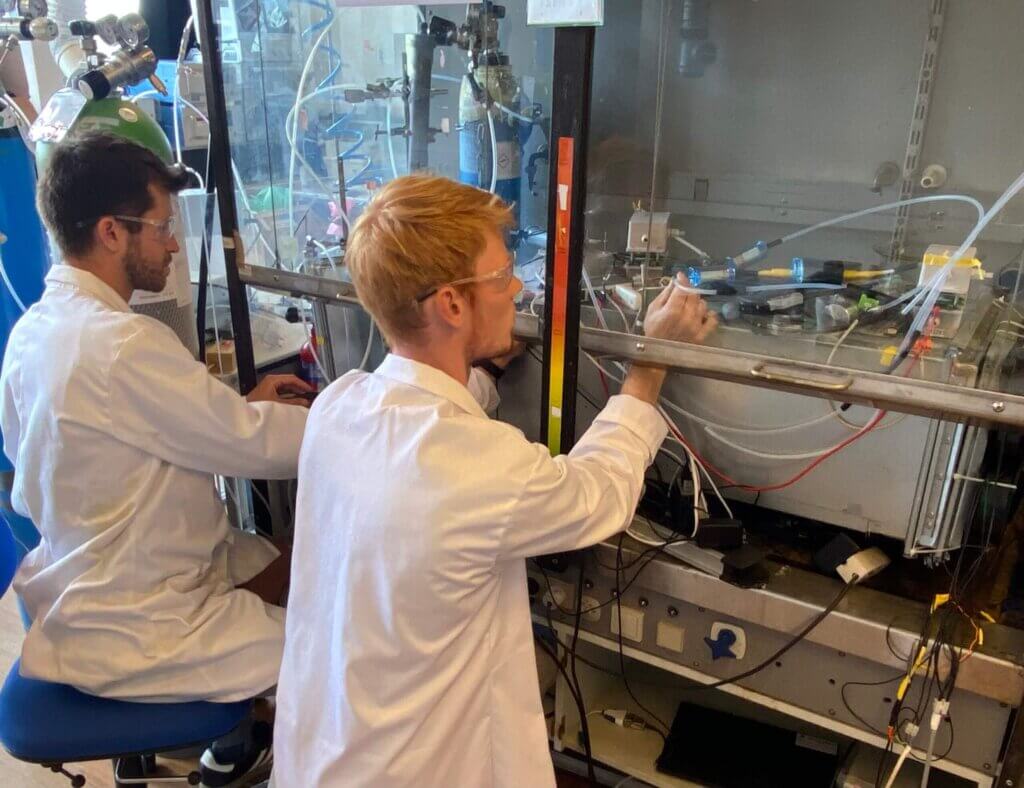
The potent greenhouse gas cannot be captured like carbon dioxide, so scientists are developing strategies to destroy it.
News Article
Innovation District Copenhagen
19 December 2023
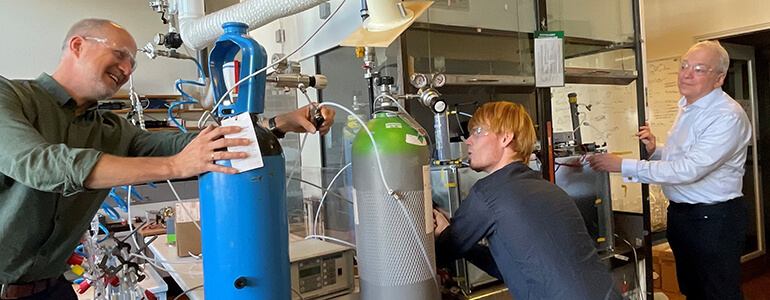
Anyone with an understanding of climate change knows that methane gas is a major climate offender. Anyone with an understanding of gas chemistry knows that methane is extremely difficult to remove when it occurs at low concentrations. Nevertheless, a researcher at Copenhagen Science City-partner, University of Copenhagen, has invented a revolutionary method that removes methane from difficult diffuse sources such leaky biogas production plants. Research published December 2023 in Environmental Research Letters proves that the method could be a gamechanger in the battle against climate change. In order to put the method to work, the researcher has co-founded the company Ambient Carbon. Now the company is looking for investors.
News release
1 October 2024
[Ambia, Indiana – October 1] Ambient Carbon, a Denmark-based company focusing on methane mitigation technology, today announces its new partnership with Benton Group Dairies to field-test a prototype of Ambient Carbon’s Methane Eradication Photochemical System (MEPS), a first-of-a-kind non-invasive technology to remove methane from dairy barn exhaust.
Expand
As part of the project, Ambient Carbon also has a Memorandum of Understanding with Danone North America, which sources milk from Benton. This month, Ambient Carbon will install methane monitors at Benton’s dairy farm in Ambia, Indiana in preparation for installing and testing a MEPS field prototype in early 2025.
News Release
18 December 2023
In a spectacular new study, researchers from the University of Copenhagen have used light and chlorine to eradicate low-concentration methane from air. to benefit the climate. The research has just been published in the journal Environmental Research Letters.
Expand
The result gets us closer to being able to remove greenhouse gases from livestock housing, biogas production plants and wastewater treatment plants to benefit the climate. The research has just been published in the journal Environmental Research Letters.
The potent greenhouse gas cannot be captured like carbon dioxide, so scientists are developing strategies to destroy it.
News Article
Innovation District Copenhagen
19 December 2023
Anyone with an understanding of climate change knows that methane gas is a major climate offender. Anyone with an understanding of gas chemistry knows that methane is extremely difficult to remove when it occurs at low concentrations. Nevertheless, a researcher at Copenhagen Science City-partner, University of Copenhagen, has invented a revolutionary method that removes methane from difficult diffuse sources such leaky biogas production plants. Research published December 2023 in Environmental Research Letters proves that the method could be a gamechanger in the battle against climate change. In order to put the method to work, the researcher has co-founded the company Ambient Carbon. Now the company is looking for investors.
News release
7 July 2025
There are significant climate and environmental benefits to mitigating the environmental impacts of livestock and biogas production. Methane is a strong greenhouse gas that leads to global warming, ammonia emissions pollute groundwater and break down forming N2O, and odor is a serious local problem that is often regulated. There is a growing focus on reducing global methane emissions, including public pledges by governments and food companies. Although some solutions exist for ammonia and odor removal, no scalable method effectively treats methane from dilute sources, including enteric fermentation, or integrates the mitigation of all three pollutants. It was found that the Methane Eradication Photochemical System, utilizing UV-light, low levels of chlorine gas produced on-site from salt water, and a NaOH scrubber, could remove 98%, 94%, and 80% of methane, ammonia, and hydrogen sulfide, respectively, from the air in a pig barn. One test showed 73% removal efficiency at 33 ppm of methane with a specific power input of 0.68 kW h/gCH4 and a quantum yield of 1.06%. This work demonstrates an important step in developing scalable technology for eradicating low concentration methane sources from agriculture and shows that there is still significant room for further efficiency gains.
News release
18 February 2025
Our researchers have submitted their latest study on mitigating agricultural emissions, which is now available on ChemRxiv:
The research focuses on addressing critical environmental challenges associated with agriculture and biogas production—reducing ammonia, methane, and odor emissions. Using the Methane Eradication Photochemical System (MEPS), we achieved:
✓ 94% ammonia reduction in a pig barn,
✓ 80% odor reduction (hydrogen sulfide), and
✓ >90% reduction in methane emissions at 6 ppm
These results showcase MEPS as a promising solution for agricultural sustainability, with potential for significant air quality improvements and methane destruction at a competitive cost.
Read the full pre-print article here: https://chemrxiv.org/engage/chemrxiv/article-details/678a699581d2151a0286e3cd
News release
1 October 2024
[Ambia, Indiana – October 1] Ambient Carbon, a Denmark-based company focusing on methane mitigation technology, today announces its new partnership with Benton Group Dairies to field-test a prototype of Ambient Carbon’s Methane Eradication Photochemical System (MEPS), a first-of-a-kind non-invasive technology to remove methane from dairy barn exhaust. As part of the project, Ambient Carbon also has a Memorandum of Understanding with Danone North America, which sources milk from Benton. This month, Ambient Carbon will install methane monitors at Benton’s dairy farm in Ambia, Indiana in preparation for installing and testing a MEPS field prototype in early 2025.
News Release
18 December 2023
In a spectacular new study, researchers from the University of Copenhagen have used light and chlorine to eradicate low-concentration methane from air. The result gets us closer to being able to remove greenhouse gases from livestock housing, biogas production plants and wastewater treatment plants to benefit the climate. The research has just been published in the journal Environmental Research Letters.
News Article
Chemical & Engineering News
4 February 2024
The potent greenhouse gas cannot be captured like carbon dioxide, so scientists are developing strategies to destroy it
News Article
Innovation District Copenhagen
19 December 2023
Anyone with an understanding of climate change knows that methane gas is a major climate offender. Anyone with an understanding of gas chemistry knows that methane is extremely difficult to remove when it occurs at low concentrations. Nevertheless, a researcher at Copenhagen Science City-partner, University of Copenhagen, has invented a revolutionary method that removes methane from difficult diffuse sources such leaky biogas production plants. Research published December 2023 in Environmental Research Letters proves that the method could be a gamechanger in the battle against climate change. In order to put the method to work, the researcher has co-founded the company Ambient Carbon. Now the company is looking for investors.
Press Release
12 Aug 2025
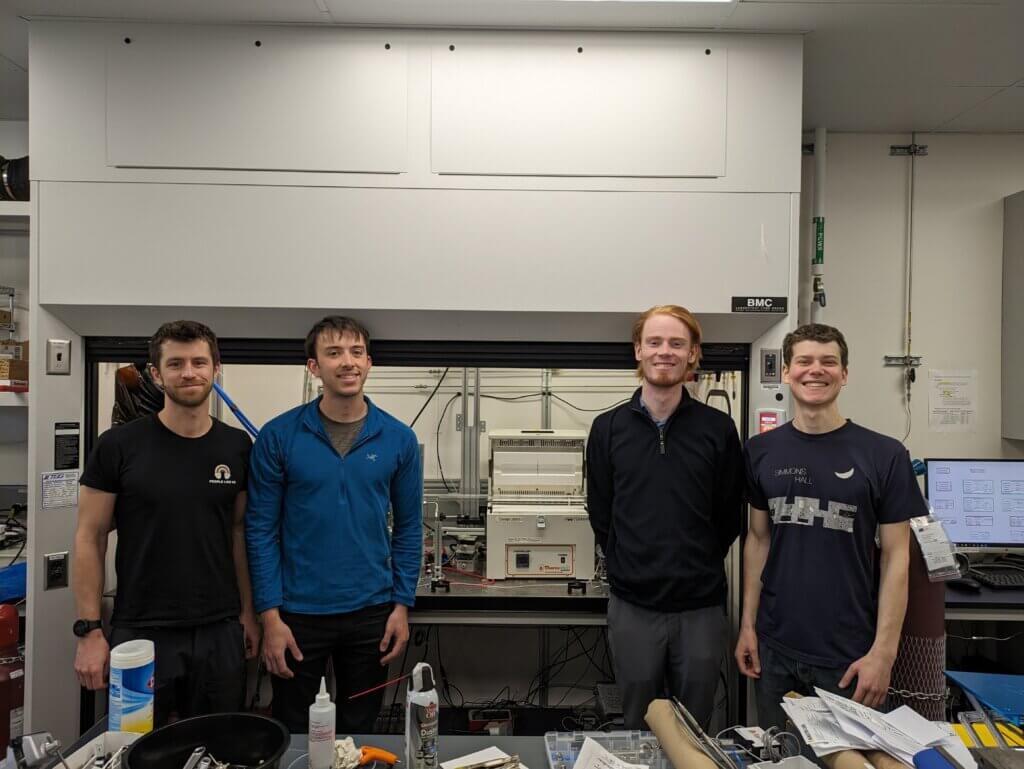
[COPENHAGEN, Denmark – August 12, 2025] A groundbreaking field demonstration of the Methane Eradication Photochemical System (MEPS) has successfully proven that dilute methane emissions from dairy barns can be effectively eliminated at commercial scale. The field trial represents the first real-world validation of a scalable technology capable of eradicating methane emissions from livestock barn air.
Methane has 84 times more global warming potential than carbon dioxide when measured over a 20-year period. Livestock emit approximately 30% of worldwide anthropogenic methane, with dairy cattle generating half of those emissions, highlighting the importance of the MEPS system in supporting the dairy industries journey to net zero.
News release
7 July 2025
Researchers from Ambient Carbon, the Department of Chemistry, University of Copenhagen, Aarhus University, and partners in the PERMA project have demonstrated an energy-efficient technology capable of significantly reducing methane, ammonia, and odor emissions from livestock barns and biogas plants. The findings, published today in ACS ES&T Air, mark a promising step toward scalable climate solutions for agriculture.
The study demonstrates that photochemical technology can effectively mitigate multiple pollutants in real-world agricultural settings. The Methane Eradication Photochemical System (MEPS), tested in the field, achieved over 98% removal of methane, 94% removal of ammonia, and 80% removal of hydrogen sulfide from barn ventilation air.
Read more https://pubs.acs.org/doi/10.1021/acsestair.5c00104
News release
January 2025
Our researchers have submitted their latest study on mitigating agricultural emissions, which is now available on ChemRxiv:
The research focuses on addressing critical environmental challenges associated with agriculture and biogas production—reducing ammonia, methane, and odor emissions. Using the Methane Eradication Photochemical System (MEPS), we achieved:
✓ 94% ammonia reduction in a pig barn,
✓ 80% odor reduction (hydrogen sulfide), and
✓ >90% reduction in methane emissions at 6 ppm
These results showcase MEPS as a promising solution for agricultural sustainability, with potential for significant air quality improvements and methane destruction at a competitive cost.
Read the full pre-print article here: https://chemrxiv.org/engage/chemrxiv/article-details/678a699581d2151a0286e3cd
News release
1 October 2024
[Ambia, Indiana – October 1] Ambient Carbon, a Denmark-based company focusing on methane mitigation technology, today announces its new partnership with Benton Group Dairies to field-test a prototype of Ambient Carbon’s Methane Eradication Photochemical System (MEPS), a first-of-a-kind non-invasive technology to remove methane from dairy barn exhaust.
Expand
As part of the project, Ambient Carbon also has a Memorandum of Understanding with Danone North America, which sources milk from Benton. This month, Ambient Carbon will install methane monitors at Benton’s dairy farm in Ambia, Indiana in preparation for installing and testing a MEPS field prototype in early 2025.
News Release
18 December 2023
In a spectacular new study, researchers from the University of Copenhagen have used light and chlorine to eradicate low-concentration methane from air. to benefit the climate. The research has just been published in the journal Environmental Research Letters.
Expand
The result gets us closer to being able to remove greenhouse gases from livestock housing, biogas production plants and wastewater treatment plants to benefit the climate. The research has just been published in the journal Environmental Research Letters.
The potent greenhouse gas cannot be captured like carbon dioxide, so scientists are developing strategies to destroy it.
News Article
Innovation District Copenhagen
19 December 2023
Anyone with an understanding of climate change knows that methane gas is a major climate offender. Anyone with an understanding of gas chemistry knows that methane is extremely difficult to remove when it occurs at low concentrations. Nevertheless, a researcher at Copenhagen Science City-partner, University of Copenhagen, has invented a revolutionary method that removes methane from difficult diffuse sources such leaky biogas production plants. Research published December 2023 in Environmental Research Letters proves that the method could be a gamechanger in the battle against climate change. In order to put the method to work, the researcher has co-founded the company Ambient Carbon. Now the company is looking for investors.
News release
1 October 2024
[Ambia, Indiana – October 1] Ambient Carbon, a Denmark-based company focusing on methane mitigation technology, today announces its new partnership with Benton Group Dairies to field-test a prototype of Ambient Carbon’s Methane Eradication Photochemical System (MEPS), a first-of-a-kind non-invasive technology to remove methane from dairy barn exhaust.
Expand
As part of the project, Ambient Carbon also has a Memorandum of Understanding with Danone North America, which sources milk from Benton. This month, Ambient Carbon will install methane monitors at Benton’s dairy farm in Ambia, Indiana in preparation for installing and testing a MEPS field prototype in early 2025.
News Release
18 December 2023
In a spectacular new study, researchers from the University of Copenhagen have used light and chlorine to eradicate low-concentration methane from air. to benefit the climate. The research has just been published in the journal Environmental Research Letters.
Expand
The result gets us closer to being able to remove greenhouse gases from livestock housing, biogas production plants and wastewater treatment plants to benefit the climate. The research has just been published in the journal Environmental Research Letters.
The potent greenhouse gas cannot be captured like carbon dioxide, so scientists are developing strategies to destroy it.
News Article
Innovation District Copenhagen
19 December 2023
Anyone with an understanding of climate change knows that methane gas is a major climate offender. Anyone with an understanding of gas chemistry knows that methane is extremely difficult to remove when it occurs at low concentrations. Nevertheless, a researcher at Copenhagen Science City-partner, University of Copenhagen, has invented a revolutionary method that removes methane from difficult diffuse sources such leaky biogas production plants. Research published December 2023 in Environmental Research Letters proves that the method could be a gamechanger in the battle against climate change. In order to put the method to work, the researcher has co-founded the company Ambient Carbon. Now the company is looking for investors.